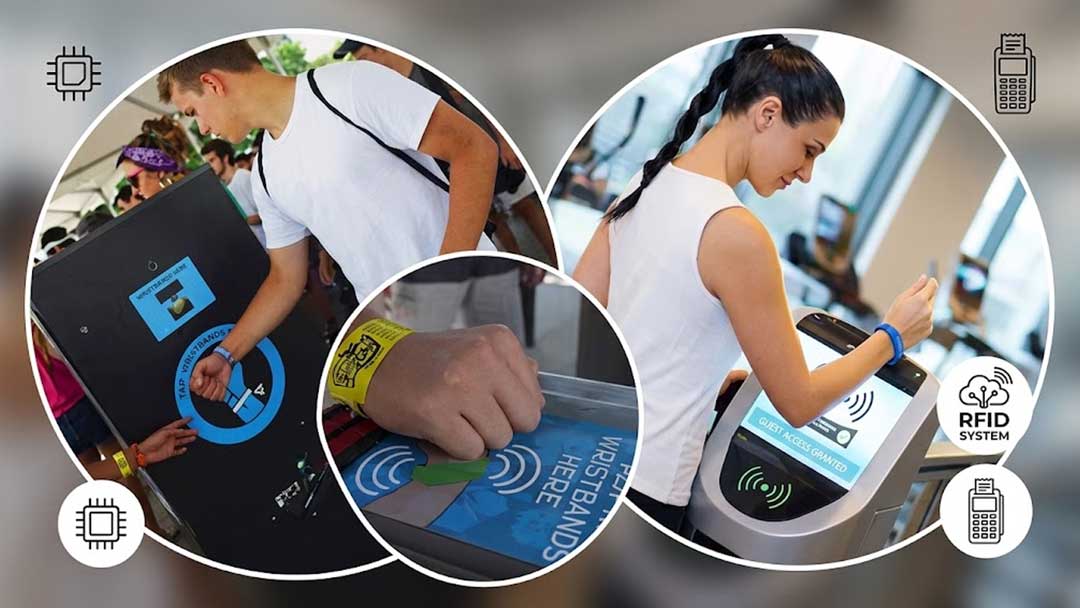
As events, hotels, resorts, gyms, and entertainment venues look for smoother ways to manage admission and guest interaction, RFID wristbands are receiving more attention. They can connect a wearable item with an identification, access, or payment system, helping organizations move beyond paper tickets, plastic cards, and manual checks.
This does not mean RFID is the right answer for every project. A wristband only works as part of a complete setup that includes a compatible chip, reader, software, and operating process. The best choice depends on the environment, wearing time, security needs, budget, and existing infrastructure.
Why RFID Wristbands Are Getting More Attention
Faster and More Convenient Identification
A conventional entry process may require a guest to find a phone, open a ticket, display a QR code, and wait for a scan. With an RFID wristband, the user can present the wristband near a compatible reader. In a properly configured system, this may help streamline identification at busy entrances, access points, lockers, or service counters.
The benefit is not simply the wristband itself. Reader placement, software response, network reliability, staff training, and the way the event is organized all affect the result. RFID can support a smoother process, but it does not remove the need for good planning.
The Shift Toward More Connected Guest Experiences
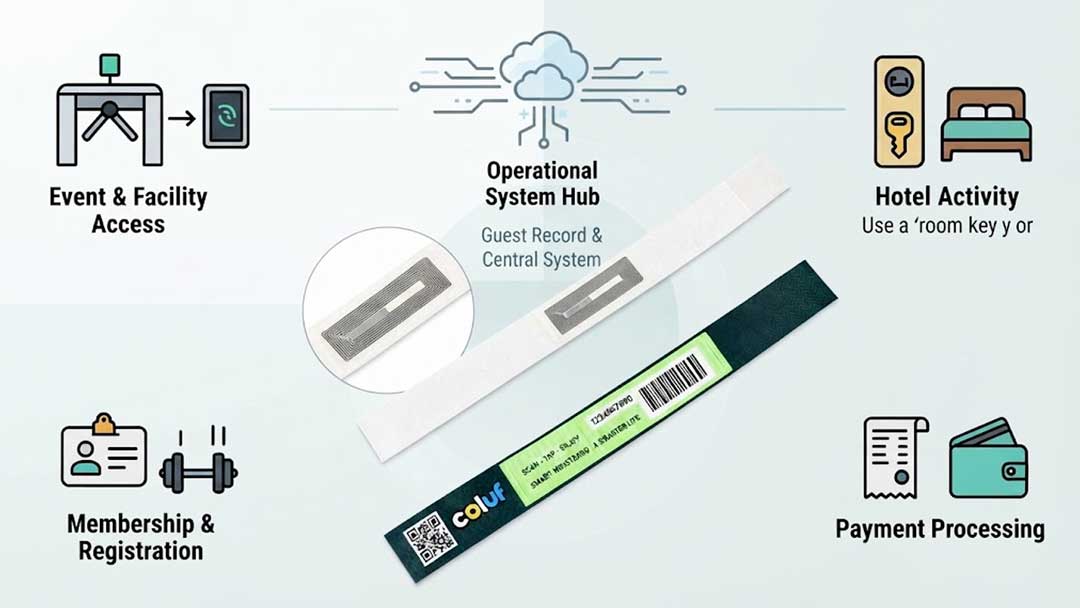
Many venues want to connect admission, membership, facility access, and selected services in one operational system. An RFID wristband may serve as the identifier that links these activities to a guest record. For example, a venue might use it for event entry, a hotel activity, or gym access, while the backend system decides what the user is allowed to do.
RFID payment wristbands are sometimes mentioned in this context. However, an RFID wristband is not automatically a payment product. Payment requires a suitable payment platform, account rules, transaction processing, and data protection measures. The wristband may identify the user, while the connected system handles the actual transaction.
Growing Demand for Contactless Interaction
Guests increasingly expect simple interactions that do not require handing over a ticket or repeatedly using a phone. RFID can support contactless identification through a reader. Some short-range wristband applications use NFC, which is a related high-frequency technology designed for close-range communication. RFID and NFC should not be treated as identical in every project: the frequency, chip, protocol, reader, and use case still need to match.
How RFID Wristbands Work
An RFID wristband normally contains an RFID chip and an antenna. The chip carries identification data or responds according to its design. The antenna communicates with the reader through radio-frequency energy.
The basic process is:
1. The guest wears the wristband.
2. A compatible reader creates the required field or sends a signal.
3. The wristband responds with information that the system can read.
4. Software checks the information and applies the relevant access or service rule.
Different RFID systems use different frequency ranges and communication methods. HF, NFC, and UHF are not interchangeable labels. A buyer should confirm the exact chip type and reader specification before placing an order. A well-printed wristband that does not match the installed system will not solve the operational problem.
The Main Types of RFID Wristbands
Cloth RFID Wristbands
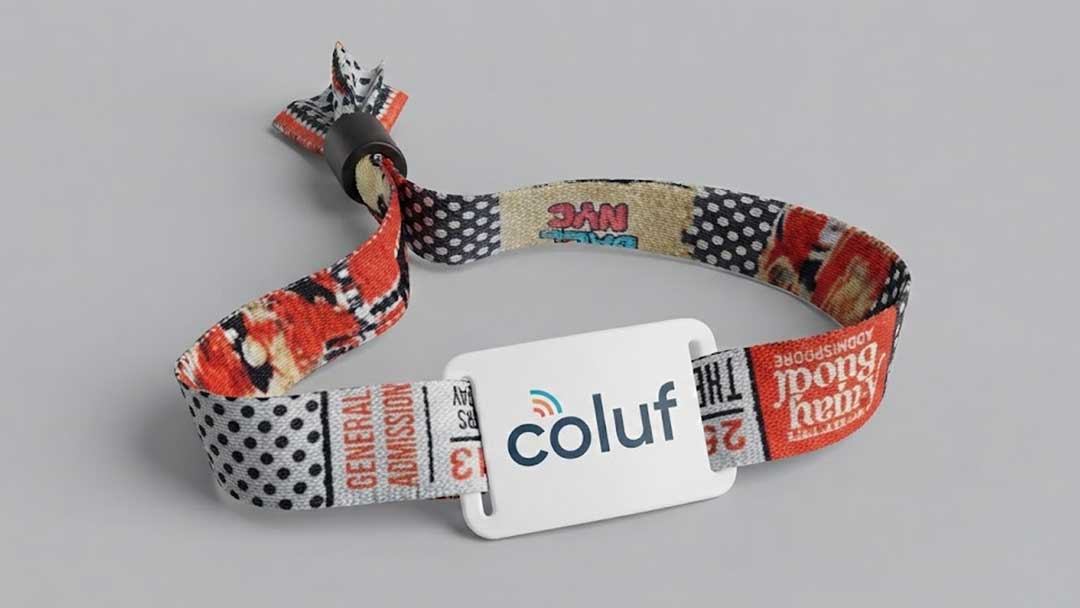
Cloth wristbands are often selected for festivals, concerts, and multi-day events where appearance and wearing comfort matter. They provide a large area for branding and can create a stronger event souvenir than a basic disposable band. The closure design determines whether the band is single-use or can be removed and reused. Cloth options may cost more than simple disposable materials, so the visual and comfort benefits should be weighed against the event budget.
Plastic and Vinyl RFID Wristbands
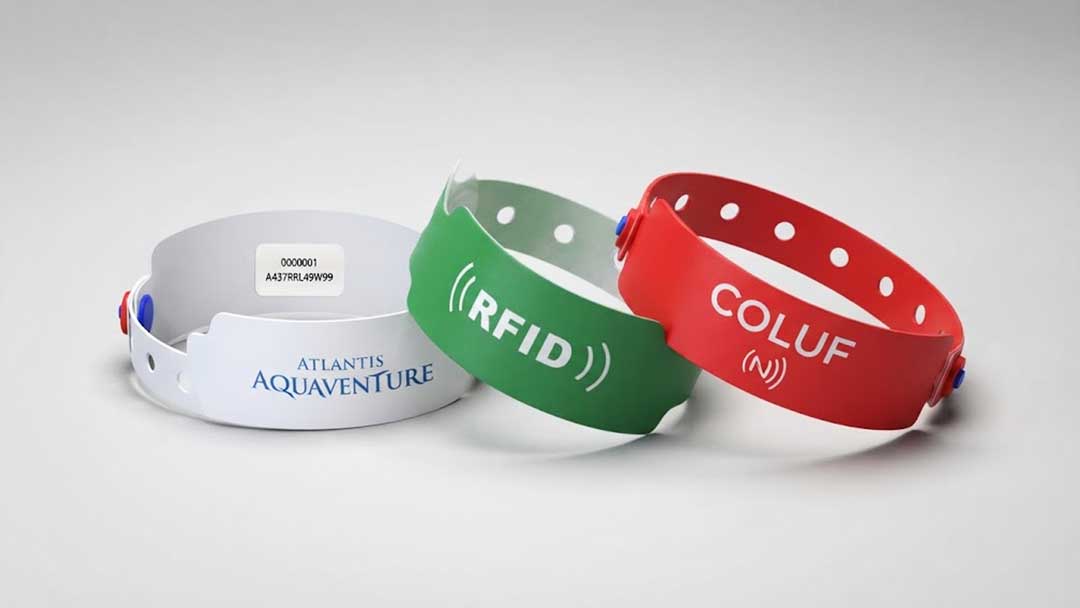
Plastic and vinyl wristbands are useful when a project needs a lightweight band with more durability than paper-based options. They can suit hotels, resorts, water-related venues, and multi-day events. Water resistance depends on the specific material, construction, chip protection, and testing conditions; it should not be assumed from the word “plastic” alone. Buyers should also check the closure, because a durable material does not automatically make the wristband reusable.
Silicone RFID Wristbands
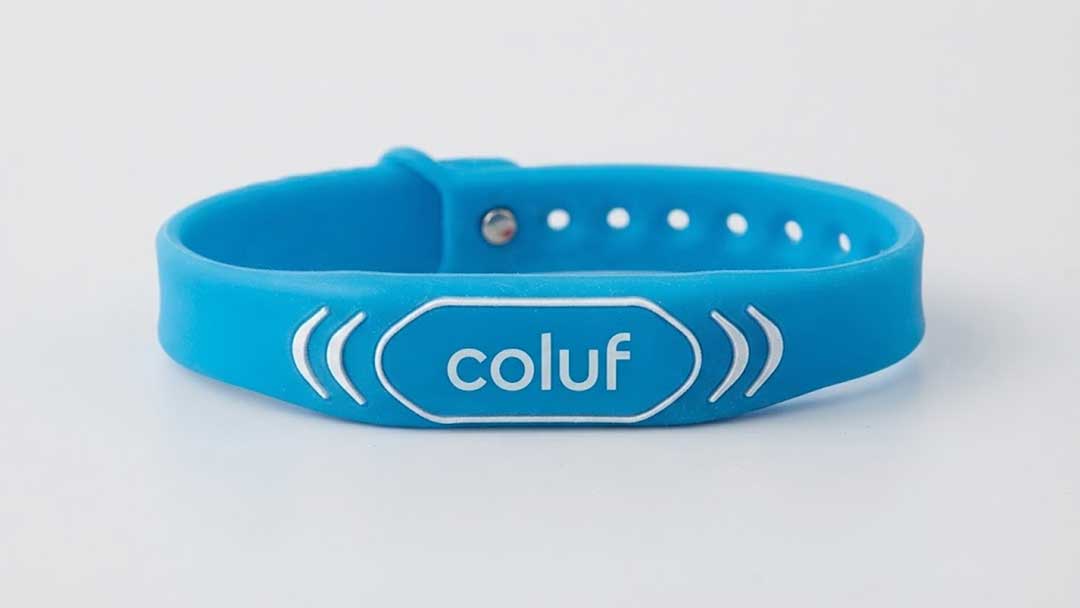
Silicone is flexible and comfortable for longer wearing periods. With a suitable chip structure and closure, silicone RFID wristbands can be designed for gyms, membership programs, recreational facilities, and repeat-use access. Their value is strongest when the organization expects a member to use the same band over time. The production specification should state whether the chip is embedded, what reader it must work with, and how the band will be issued and returned.
Tyvek RFID Wristbands
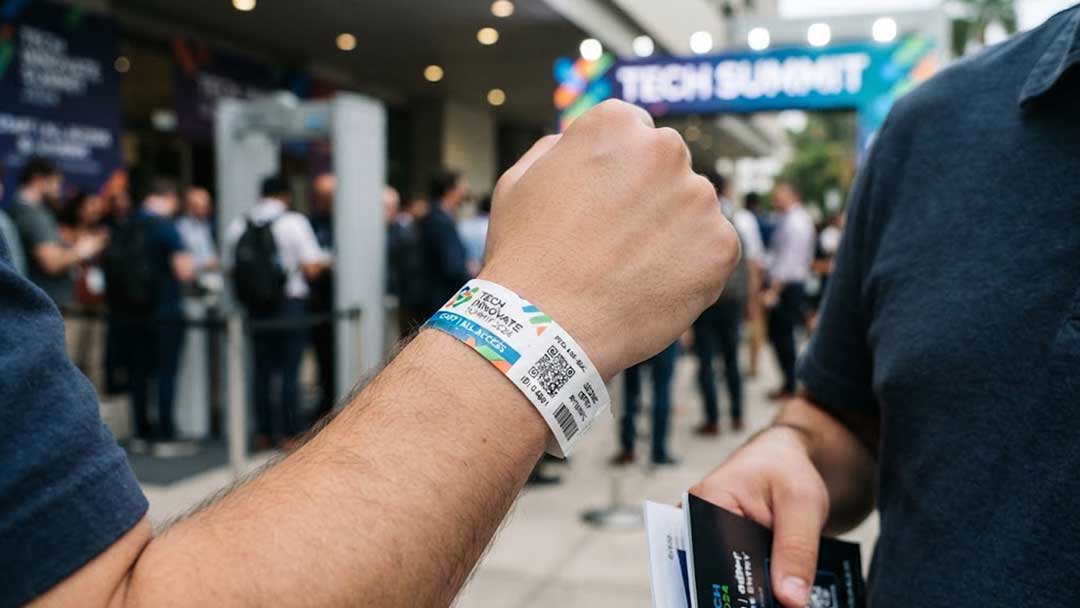
Tyvek wristbands are lightweight and generally positioned for short-term, single-use applications. They can be practical for festivals, nightclubs, amusement parks, and temporary access. A tamper-evident closure may help reduce unauthorized transfer, but no wristband should be described as a complete security system. The band is one part of an access-control process.
Where RFID Wristbands Are Being Used
| Type | Typical wearing period | Reuse potential | Suitable applications |
| Tyvek | Short term | Usually single use | Temporary events and access |
| Plastic or vinyl | Multi-day | Depends on closure | Hotels, resorts, events |
| Cloth | Multi-day or extended wear | Depends on closure | Festivals and concerts |
| Silicone | Long term | Often designed for reuse | Gyms and membership programs |
RFID vs. QR Codes: Which Is Better?
| Feature | RFID wristband | QR code |
| Contactless use | Usually yes | Yes, when scanned without contact |
| Line of sight | Often not required | Usually required for camera scanning |
| Smartphone requirement | Not necessarily | Often used, depending on the system |
| Infrastructure | RFID reader and software | Camera or QR scanner and software |
| Initial system cost | May be higher | Often lower |
| Best fit | High-volume or automated workflows | Simple, low-cost identification |
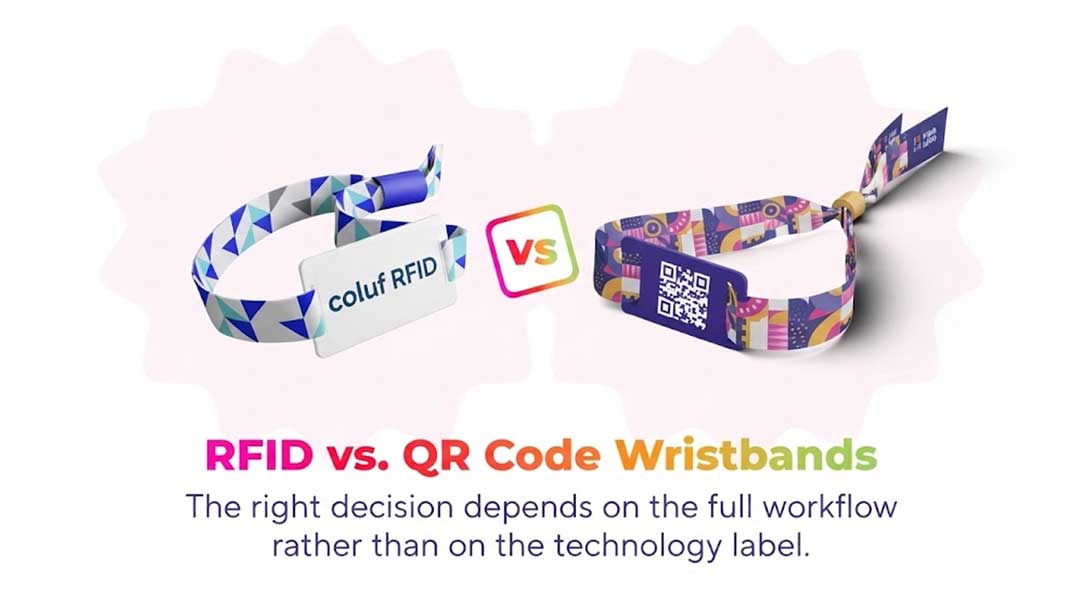
RFID may suit a high-volume environment where users should not repeatedly display a screen. QR codes may remain a practical choice for smaller or budget-sensitive projects. The right decision depends on the full workflow rather than on the technology label.
What Should Businesses Check Before Ordering?
Before requesting custom RFID wristbands, confirm the frequency, chip type, protocol, reader model, encoding requirements, and expected read position. Then select the material according to wearing duration and environment: a disposable band for a short event, a cloth or vinyl option for longer use, or silicone for a repeat-use membership program.
The artwork should include the logo, brand colors, serial numbers, QR codes, or variable data required by the project. Buyers should also discuss closure type, packaging, encoding, sample testing, order quantity, and shipping. A manufacturer can help coordinate these parts, but the buyer still needs to provide the system requirements that the wristband must meet.
How Manufacturers Support Custom RFID Wristband Projects
A capable manufacturer can help match the material and closure to the application, coordinate chip and frequency requirements, prepare artwork, arrange samples, and organize bulk production. Testing should focus on the actual reader and operating environment rather than only checking the printed appearance.
For Coluf, the manufacturing conversation should begin with the application: event entry, hotel service, gym membership, visitor management, or another workflow. From there, the material, RFID component, printing, closure, encoding, packaging, and delivery plan can be evaluated together. This approach is more useful than selecting a wristband only because it looks attractive or has a low unit price.
Frequently Asked Questions About RFID Wristbands
What is an RFID wristband?
It is a wearable band containing an RFID component that can communicate with a compatible reader for identification or other system functions.
How do RFID wristbands work?
A reader sends or creates the required radio-frequency field, the wristband responds, and connected software checks the data and applies a rule such as entry permission or membership recognition.
Are RFID wristbands waterproof?
Not automatically. Water resistance depends on the material, construction, chip protection, and intended environment. The specification should be confirmed for the actual use case.
Can RFID wristbands be reused?
Some silicone and durable wristbands are designed for reuse. Tyvek and tamper-evident disposable bands are generally intended for single use. Reuse also depends on the closure and the operating process.
Are RFID wristbands compatible with all RFID readers?
No. Compatibility depends on frequency, chip, protocol, antenna design, reader configuration, and encoding requirements.
How much do RFID wristbands cost?
Cost depends on the material, RFID component, printing, quantity, encoding, closure, packaging, and shipping. A reliable quotation requires the system and application details.
What type of RFID wristband is best for events?
It depends on event duration, environment, security needs, branding, budget, and reuse requirements. Tyvek may fit short events, cloth or vinyl may suit multi-day use, and silicone may fit long-term programs.
Conclusion
RFID wristbands are becoming a practical option for organizations that want to connect physical identification with digital management. Their value is not limited to faster entry. Depending on the system, they may support access control, guest services, membership recognition, and selected cashless workflows.
The important decision is not simply whether to use RFID. It is whether the chip, reader, material, closure, software, and operating process are suitable for the same job. Businesses looking for custom RFID wristbands can simplify the project by working with a manufacturer that can coordinate component selection, printing, customization, testing, and bulk production.
For custom RFID wristband requirements, contact Coluf with your application, reader information, material preference, quantity, and artwork needs.

COLUF specialize in plastic printing, RFID solutions, and commercial printing services for global businesses.
Copyright © Chongqing Colorful Technology Co., Ltd. All Rights Reserved
 EN
EN